
Congress MP Shashi Tharoor on Monday criticised External Affairs Minister S. Jaishankar’s statement in Parliament on the ongoing conflict in West Asia, saying that merely reading a statement without allowing discussion was unfair to members of the House.
Speaking to reporters outside Parliament, Tharoor emphasised that the situation in West Asia was serious and required a detailed discussion in Parliament so that lawmakers could raise concerns and ask questions.
“The issue is of great importance and deserves proper debate in the House. Parliament exists to discuss matters that affect India. Simply reading out a statement without allowing questions or discussion is not fair to members of the House,” Tharoor said.
He added that the Opposition wanted the opportunity to discuss key issues arising from the conflict, including energy security and rising fuel prices.
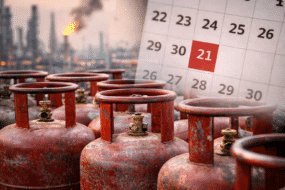
“We wanted a discussion so that we could ask questions about energy security, oil prices which have already increased, and the recent rise in LPG prices. These are matters that directly impact the country,” he said.
Tharoor also highlighted the importance of addressing broader international law issues and India’s national interests in the context of the conflict.
“There are larger questions of international law involved. Whatever those questions may be, Parliament is the appropriate forum to raise them. We are not claiming to be the government, but Parliament should still be used to hear the views of different sections of the nation,” he added.
Congress leader K. C. Venugopal also supported the call for a debate, stating that the situation in West Asia should not be viewed as a partisan issue and that the government should consult the Opposition on such important matters.
The criticism followed Jaishankar’s address to both Houses of Parliament, where he informed lawmakers that Prime Minister Narendra Modi is closely monitoring the evolving situation in West Asia.
“The Prime Minister continues to closely monitor the developments, and relevant ministries are coordinating to ensure effective responses,” Jaishankar said.
The external affairs minister highlighted that the conflict has significant implications for India because of the country’s close economic and strategic links with the region.
India has nearly one crore citizens living and working across Gulf nations, while several thousand Indians are currently in Iran for studies or employment.
Jaishankar also pointed out that West Asia plays a crucial role in India’s energy security as the region is a major supplier of oil and natural gas.
He warned that instability in the region could disrupt supply chains and global energy markets.
The government has already issued advisories to Indian nationals in Iran and is maintaining communication with Indian citizens across the Gulf region.
Addressing concerns related to trade disruptions through the Strait of Hormuz, Jaishankar said the government is closely monitoring energy markets and will prioritise the interests of Indian consumers.
“In view of the implications for energy security, the government is carefully watching the availability, cost and risks in global energy markets. The interests of Indian consumers remain our top priority,” he said.
Originally published on 24×7-news.com.