
Iran has rejected claims from the United States that it is seeking a ceasefire, insisting instead that any end to the ongoing conflict must include reparations and firm guarantees against future attacks.
Iranian Foreign Minister Abbas Araghchi said Tehran has never requested negotiations or a truce and will continue its military operations until Washington acknowledges what Iran describes as an “illegal war.”
Iran Rejects Ceasefire Claims
Araghchi dismissed comments by US President Donald Trump, who had suggested that Iran was looking for a way to end the conflict.
According to the Iranian foreign minister, Tehran’s position remains unchanged: military operations will continue until the United States recognises responsibility for the war and agrees to compensate Iran for damages caused during the conflict.
He added that Iran also wants strong assurances that similar attacks will not take place in the future, referencing previous strikes carried out by the United States and Israel.
Strait of Hormuz at the Center of the Crisis
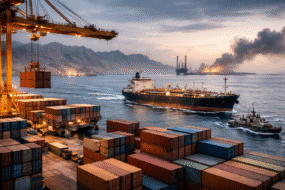
The conflict has intensified tensions around the Strait of Hormuz, one of the world’s most critical shipping routes for energy supplies.
Roughly 20 percent of global oil shipments pass through the narrow waterway. Since the conflict escalated, shipping traffic in the region has been disrupted, pushing global crude oil prices significantly higher.
Iran has said it has not officially closed the strait but will review ship movements individually, allowing passage for certain countries while restricting vessels linked to the United States and its allies.
Global Response Remains Cautious
The United States has urged several nations, including China, Japan, and the United Kingdom, to participate in a coalition aimed at protecting shipping routes in the region.
However, responses from many countries have been cautious, reflecting concerns about becoming directly involved in the escalating conflict.
Conflict Triggered by Assassination
The latest escalation began after US-Israeli strikes on February 28 reportedly killed Iran’s Supreme Leader, Ayatollah Ali Khamenei. The attack triggered a wave of missile and drone strikes by Iran targeting US military bases and other strategic sites across the region.
Iranian authorities have since framed the conflict as a defensive war, using the incident to rally public support and call for national unity.
According to Iran’s representative at the United Nations, the conflict has also resulted in civilian casualties and injuries inside the country.
Diplomatic Efforts Continue
Despite the escalating tensions, diplomatic efforts are underway from several countries seeking to reduce the risk of a wider regional war.
India has maintained communication with Tehran, and a recent conversation between Prime Minister Narendra Modi and Iranian President Masoud Pezeshkian reportedly helped secure limited safe passage for Indian ships through the Strait of Hormuz.
Meanwhile, French President Emmanuel Macron has urged Iran to halt attacks across the region and restore freedom of navigation in the strategic waterway.
These diplomatic efforts indicate that alternative channels outside the US-led military approach may play a role in shaping any future negotiations aimed at ending the conflict.
With oil prices rising and global trade routes under pressure, the situation in the Middle East continues to remain one of the most closely watched geopolitical crises worldwide.
Originally published on 24×7-news.com.