
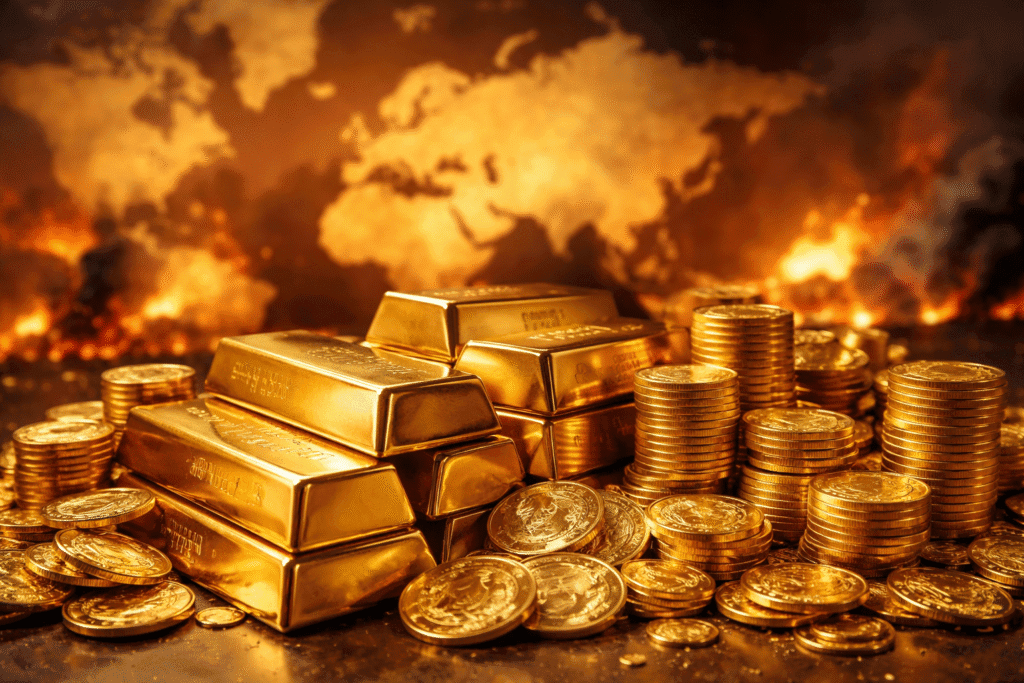
Escalating tensions in the Middle East have triggered a massive rally in gold, pushing the precious metal’s total market value to an estimated $30-$35 trillion. The surge comes as investors worldwide rush toward safe-haven assets amid uncertainty created by the ongoing conflict involving Iran.
The rally gained momentum after US-backed Israeli strikes on Iran and Tehran’s retaliatory actions across the region intensified geopolitical risk. The developments sparked volatility in global financial markets, prompting investors to shift funds away from equities and into traditional stores of value like gold.
International gold prices have surged beyond $5,400 per ounce and briefly approached record levels near $5,600, extending a strong upward trend that has been building for several years. The rally had already been supported by central-bank purchases and persistent inflation concerns following the pandemic.
With prices climbing sharply, the total value of gold held above ground has expanded dramatically. Analysts now estimate the global gold market to be worth between $30 trillion and $35 trillion, a figure that significantly exceeds the combined gross domestic product of India and the United Kingdom, which together stand at roughly $8-$9 trillion.
Market observers say gold may be entering a major new phase of growth. The metal has recently broken out of a long 13-year consolidation period, similar to historical breakouts seen in the early 1970s and mid-2000s, both of which were followed by extended bull runs lasting several years.
The ongoing geopolitical crisis has further strengthened gold’s appeal as a financial refuge. Analysts note that every escalation in the conflict, from missile exchanges in the Gulf to threats against the Strait of Hormuz and attacks on energy infrastructure, has triggered renewed demand for bullion while pressuring stock markets and driving oil prices higher.
Many investors now view gold as a critical hedge in an increasingly uncertain global environment marked by war, inflation, and rising debt levels.
Despite the strong rally, experts remain divided over whether the surge will continue at the same pace. Some believe a potential easing of tensions in the Middle East, stronger global economic growth, or rising real interest rates could eventually lead to a correction in gold prices.
Others argue that deeper structural factors—such as central-bank accumulation, persistent geopolitical instability, and declining confidence in fiat currencies—could sustain gold’s role as a dominant store of wealth in the global financial system for years to come.
Originally published on 24×7-news.com.