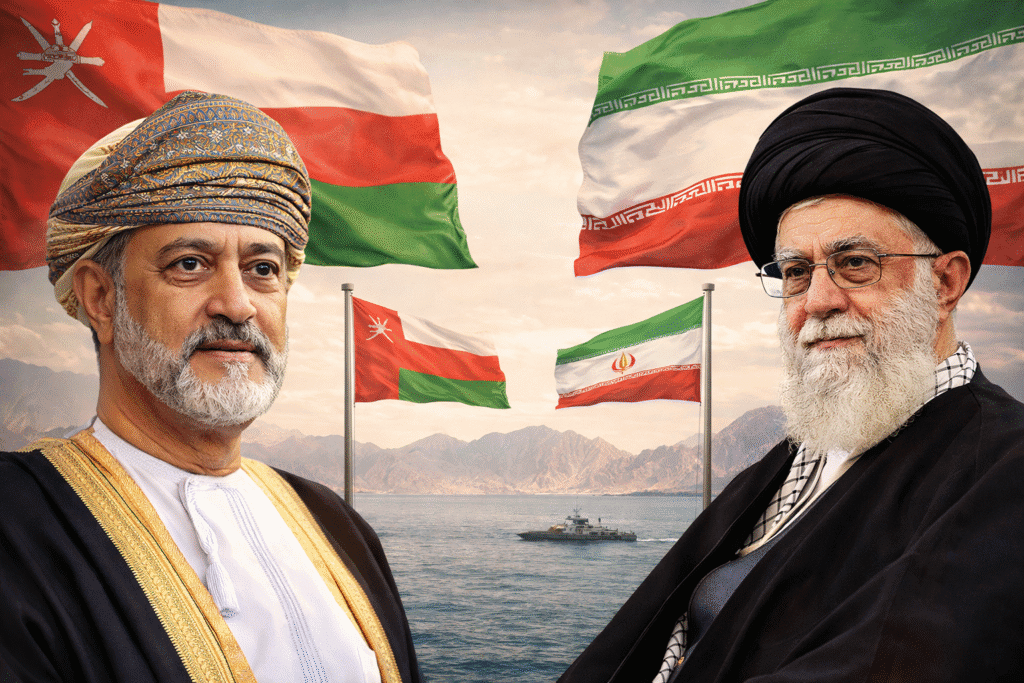
As hostilities between Israel and Iran expanded into a broader regional confrontation, several Gulf nations reported missile activity and heightened air defence responses. Sirens echoed across cities such as Dubai and Doha following Iran’s retaliatory strikes. However, Oman stood out as one Gulf state that appeared largely unaffected.
Analysts attribute this to Oman’s long-standing diplomatic relationship with Iran, rooted in strategic cooperation, neutrality, and decades of trust-building.
A Relationship Dating Back to the 1970s
Iran–Oman ties trace back to the early 1970s, when the Shah of Iran supported Sultan Qaboos bin Said during the Dhofar rebellion by deploying Iranian troops to help suppress the insurgency. This military cooperation laid the groundwork for a durable security partnership.
Following Iran’s 1979 Islamic Revolution, many Gulf monarchies distanced themselves from Tehran. Oman, however, maintained open diplomatic engagement. Over time, this consistent approach fostered mutual respect and confidence between Muscat and Tehran.
Oman’s Neutral Foreign Policy
Often referred to as the “Switzerland of the Middle East,” Oman has carefully balanced its foreign policy. Although a member of the Gulf Cooperation Council (GCC), Muscat has historically avoided adopting a confrontational stance toward Iran.
The country maintains relations with Western powers while preserving strong ties with Tehran. This balanced diplomacy has allowed Oman to remain neutral in numerous regional disputes.
Mediator Between Iran and the West
Oman has frequently served as a discreet intermediary in regional diplomacy. It hosted secret talks between Iran and the United States that eventually contributed to the 2015 nuclear agreement.
Even during periods of intense tension, Muscat has kept communication channels open between Tehran and Washington. This mediator role has elevated Oman’s strategic importance to Iran.
Shared Strategic and Economic Interests
Geography plays a crucial role in Oman–Iran relations. Both countries share responsibility for overseeing the Strait of Hormuz, a critical global oil shipping route. Maintaining stability in these waters is vital for both nations.
Economic cooperation further strengthens ties. Proposals such as an Iran–Oman gas pipeline aim to position Oman as a hub for Iranian gas exports, offering Tehran alternative access to global markets. Trade, maritime security cooperation, and tourism also contribute to their partnership.
Why Oman Avoided Being Targeted
In contrast to other Gulf states that host major US military installations or openly align against Iran, Oman has largely stayed out of regional rivalries. Iran’s disputes with certain Gulf countries have often involved proxy conflicts or political tensions rather than direct confrontation with Muscat.
Oman’s consistent neutrality and diplomatic balancing appear to have shielded it from becoming a target during the latest escalation.
A Policy Rooted in Dialogue
Oman’s foreign policy tradition emphasizes dialogue and peaceful coexistence. Former ruler Sultan Qaboos once described the country’s approach as siding with “rightness, justice, friendship and peace,” while promoting cooperation among nations.
For decades, this strategy has allowed Oman to maintain stable relations across competing regional blocs — a policy that once again seems to have preserved its security amid rising tensions in the Gulf.
Originally published on 24×7-news.com.