
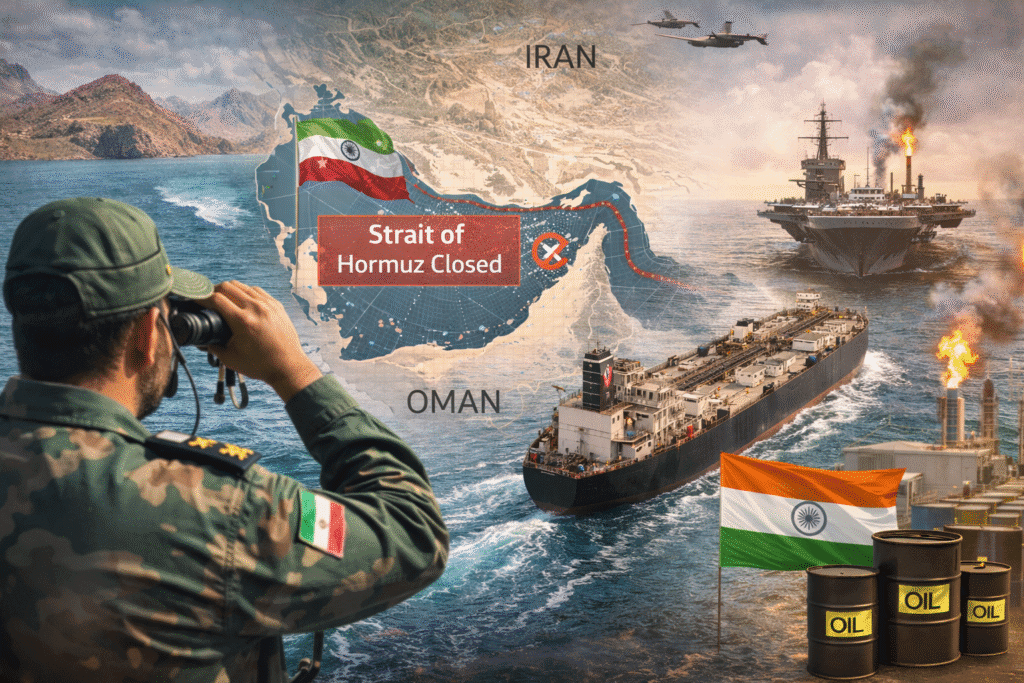
Amid rising tensions with the United States, Iran temporarily restricted movement through parts of the Strait of Hormuz on Tuesday, citing safety and maritime concerns. Iranian media reported that the restrictions lasted only a few hours and coincided with indirect nuclear negotiations between Tehran and Washington in Geneva.
The move drew global attention due to the strategic importance of the Strait of Hormuz, a narrow maritime corridor through which nearly 20 per cent of the world’s oil and gas supplies are transported daily. Any disruption in this vital passage has immediate implications for global energy markets, particularly for Asian economies.
The development comes against the backdrop of escalating rhetoric between the two countries. Earlier, Iran had warned of firm action if the United States continued expanding its military presence in the Middle East. Tensions intensified further after US President Donald Trump expressed support for the idea of regime change in Iran.
Why the Strait of Hormuz Matters
The Strait of Hormuz lies between Iran to the north and Oman and the United Arab Emirates to the south. It connects the Persian Gulf to the Gulf of Oman and serves as a critical gateway for oil exports from major producers such as Saudi Arabia, Iraq, Kuwait, Qatar and Iran.
At its narrowest point, the strait is approximately 33 kilometres wide, yet it carries nearly 20 million barrels of crude oil and refined fuels every day. This makes it one of the most important energy chokepoints in the world.
For India, the stakes are particularly high. Around 60 per cent of India’s natural gas imports pass through the Strait of Hormuz. Other major Asian economies—including China, Japan and South Korea—are also heavily dependent on energy shipments routed through this corridor.
Experts warn that even a short-term disruption can create volatility in oil prices. A prolonged closure would likely trigger sharp increases in fuel costs, disrupt supply chains and push up manufacturing and transportation expenses globally. While some countries have alternative routes and reserves, these options can handle only a limited portion of daily energy flows.
Although the restriction was brief, the episode underscores how geopolitical tensions in the Middle East can quickly reverberate across global markets, particularly for energy-importing nations like India.
Originally published on 24×7-news.com.