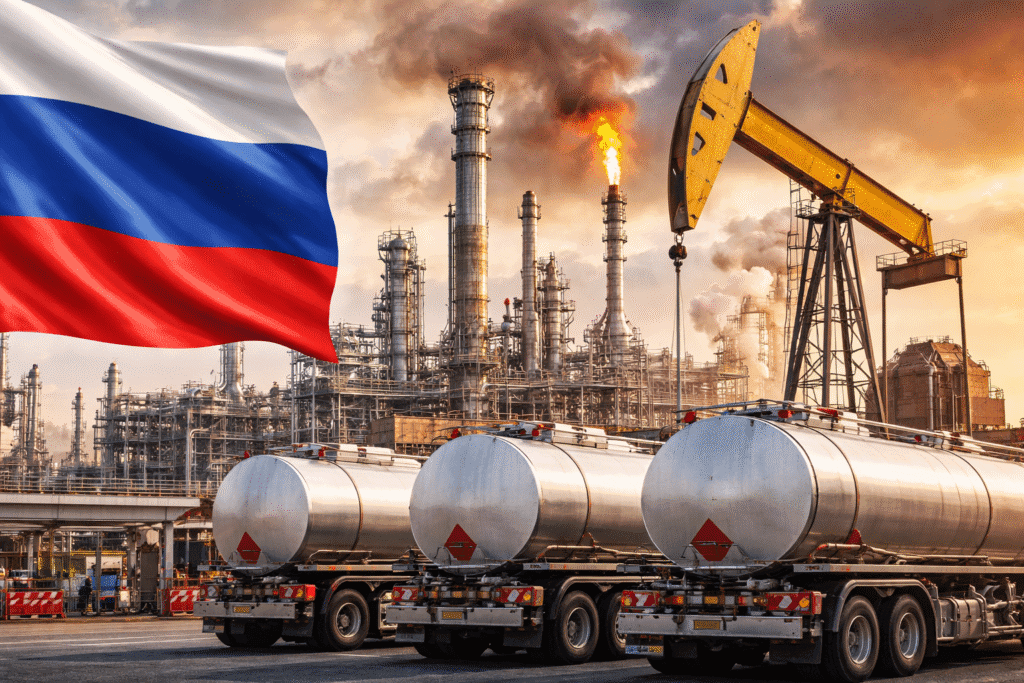
Russia has announced a temporary suspension of petrol exports from April 1 to July 31, aiming to stabilise domestic fuel supply and control rising prices. The decision was directed by Deputy Prime Minister Alexander Novak, who has instructed the Ministry of Energy to formalise the proposal.
Reason Behind the Export Ban
The move comes amid increased volatility in global energy markets, largely driven by geopolitical tensions in West Asia. The ongoing conflict involving Israel and Iran has disrupted supply chains and caused fluctuations in oil and fuel prices worldwide.
Russian authorities stated that the export restriction is a precautionary step to ensure sufficient availability of petrol within the country and prevent domestic price surges.
Countries Likely to Be Affected
Russia exports between 120,000 and 170,000 barrels of petrol per day, making it a significant supplier in the global fuel market. The export ban is expected to impact major buyers such as China, Turkey, Brazil, several African nations, and Singapore.
These regions rely heavily on Russian refined petroleum products, and the sudden halt could lead to tighter supply and price pressures in their local markets.
Minimal Impact on India
India is expected to remain largely unaffected by this decision. Unlike some countries, India primarily imports crude oil rather than refined petrol. This allows domestic refineries to process crude independently, reducing reliance on imported finished fuel.
As a result, the export ban is unlikely to have a direct impact on petrol availability or pricing in India.
Previous Export Restrictions
This is not the first time Russia has imposed such restrictions. Similar export bans were introduced in the past to manage domestic supply, particularly when refinery operations were disrupted by external factors, including attacks linked to the Ukraine conflict.
Officials have indicated that current refinery operations are running at full capacity, with adequate stock levels of petrol and diesel available to meet domestic demand.
Focus on Price Stability
The decision follows a high-level meeting held in Moscow, where maintaining stable fuel prices was highlighted as a priority under President Vladimir Putin’s leadership.
Industry data shows that Russia exported around 5 million metric tonnes of petrol last year, equivalent to approximately 117,000 barrels per day. Authorities have also indicated that further export restrictions could be considered if market conditions worsen.
Global Market Outlook
Russia’s move adds another layer of uncertainty to already strained global energy markets. With supply disruptions in multiple regions, countries dependent on imports may face increased price volatility in the coming months.
However, India’s diversified energy sourcing and strong refining capacity are expected to cushion it from immediate impacts.
Originally published on 24×7-news.com.