India is drawing significant global attention as two major developments—one in healthcare and the other in energy—signal potential shifts with wide-ranging impact.
A ‘Magic Pill’ Opportunity for India
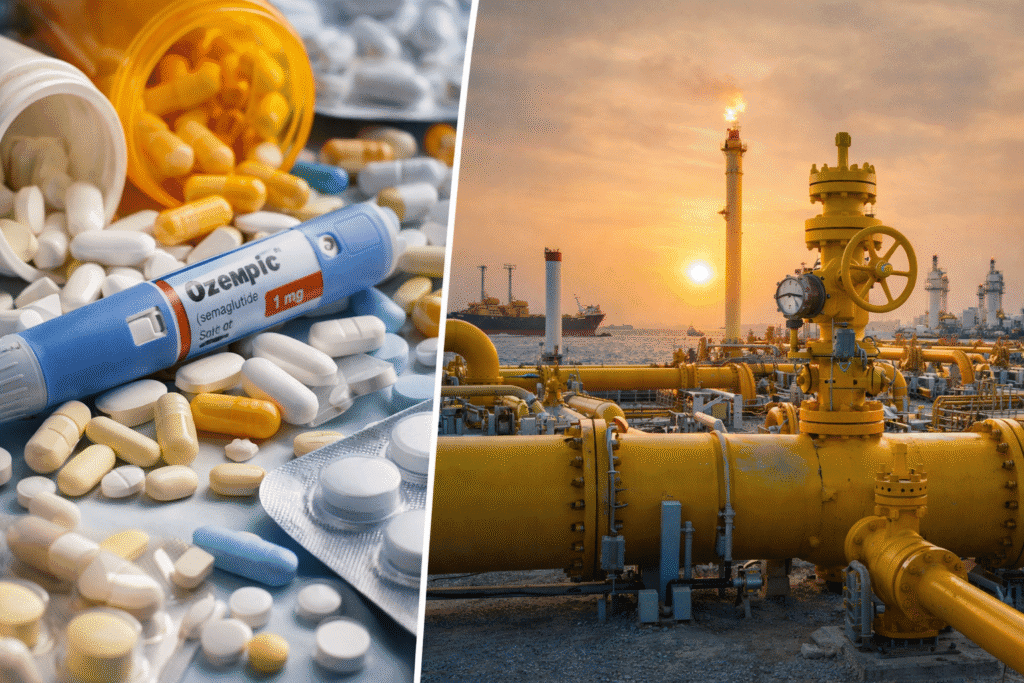
The expiration of the patent for semaglutide, the key ingredient behind blockbuster drugs like Ozempic and Wegovy, is being seen as a major turning point for India’s pharmaceutical sector.
With the patent ending, Indian drug manufacturers are expected to launch multiple generic versions at significantly lower prices. Analysts suggest this could reduce costs by more than half, making treatment for diabetes and obesity far more accessible.
Industry estimates indicate that dozens of generic versions could enter the market within months, intensifying competition and expanding availability not only in India but also globally.
This moment has been described by financial analysts as a potential “magic-pill” breakthrough, positioning India as a major hub for affordable healthcare solutions.
Piped Gas: The Next Energy Concern?
At the same time, concerns are emerging around India’s growing dependence on piped natural gas (PNG) and compressed natural gas (CNG), particularly amid ongoing geopolitical tensions in West Asia.
Demand for natural gas in India continues to rise, driven by industrial use, fertiliser production, power generation, and expanding city gas networks. With over 15 million PNG connections and CNG now the second-largest auto fuel, reliance on gas is increasing steadily.
India’s gas supply is a mix of domestic production and imported liquefied natural gas (LNG). However, a significant portion of these imports comes from the Gulf region, particularly Qatar.
Geopolitical Risks and Supply Routes
A major concern lies in the Strait of Hormuz, a critical maritime route through which a large share of India’s LNG imports pass. With ongoing regional tensions affecting shipping routes and exports, there is growing uncertainty around supply continuity.
While domestic production offers some buffer, disruptions in LNG shipments could lead to price volatility rather than immediate shortages for consumers.
Recent halts in exports from key LNG facilities in the region have added to these concerns, with only previously dispatched cargoes currently making their way to India.
Global Perspective on India
Beyond healthcare and energy, global attention is also focused on India’s role in international diplomacy and economic partnerships.
Discussions around trade, geopolitical alignments, and strategic relationships continue to shape how India is perceived on the global stage, especially as countries look to balance economic cooperation with political considerations.
Conclusion
India stands at a critical intersection of opportunity and risk.
On one hand, the pharmaceutical sector is poised for a major boost with the availability of affordable generic medicines. On the other, energy security remains vulnerable to global disruptions.
Together, these developments highlight India’s growing influence—and exposure—in an increasingly interconnected world.
Originally published on 24×7-news.com.